
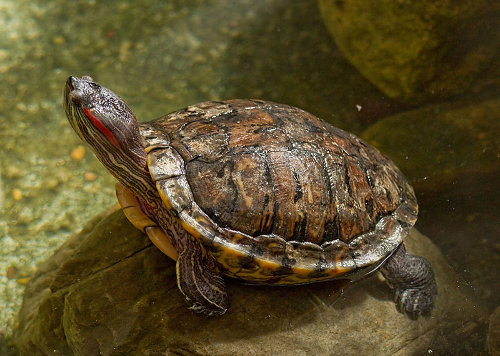
Why Red-Eared Sliders Are London’s Most Common ‘Lost’ Reptile
Have you ever walked along one of London’s many canals or ponds and spotted a small, dark-shelled turtle sunbathing on a rock? You’ve probably just had a glimpse of a red-eared slider, a popular and commonly lost pet reptile in London.
These mini escape artists can get out of tanks, climb barriers, dig tunnels and get into the wild, but how are they so good at it? And what should you do if you find one? Let’s dive into the surprising world of London’s lost turtles, so you can have peace of mind at home when playing your favorite games online at Azurslot!
Why They Keep Going Missing
Among the most well-loved turtles worldwide are the red-eared sliders (Trachemys scripta elegans). They are domesticated due to their small size, high survival rates, and the characteristic red coloration around the ear. But, they are also clever runaways, and they are swarming in the waterways of the city.
They’re Stronger (and Smarter) Than They Look
Many first-time owners underestimate their pet’s abilities, as red-eared sliders are:
- Excellent climbers – They can scale tank decorations, rocks, and even wire mesh.
- Surprisingly strong – Their little legs can push open loose tank lids.
- Opportunistic explorers – If there’s a gap, they’ll find it.
A turtle that seems perfectly content one day might vanish the next, leaving owners baffled.
They Grow Faster Than Expected
Another reason so many red-eared sliders go missing? Owners aren’t prepared for how big they get.
- The babies are very small (the size of a 50p coin).
- Adults grow to 30 cm (12 inches) in length of the shell.
These pets are often purchased impulsively, without the knowledge that they are going to need a lot more tank space (or even a pond) as it matures. When the time comes that they are too big (or too messy), some owners just dump them into the nearby pond, thinking that they will flourish in the wild.
The Problem With ‘Released’ Turtles
These creatures are native to the southern United States, not the UK, so when they’re released into London’s waterways, they compete with native wildlife.
They Outcompete Local Species
- They have the same diet as amphibians and native turtles.
- They force out smaller species due to their aggression.
- Ecosystems are disrupted by their rapid reproduction.
These factors make it illegal to release them into the wild. Despite this, many escape or get abandoned.
They Can Survive (But Not Thrive) in the UK
While they can survive a cold winter by burrowing into mud, they don’t always live long or healthy lives in the wild.
- Cold snaps can be deadly.
- The Pollution in urban waterways harms them.
- Predators like foxes and herons see them as food.
How to Help a Lost One
If you spot a red-eared slider in the wild, don’t ignore it! Here’s what to do:
Step 1: Check if It’s Truly Wild or Just Lost
- Does it look healthy? (Bright eyes, intact shell, active movement)
- Is it near a residential area? (Likely an escaped pet)
- Is it very large? (Probably been out for years)
If it seems like a recent escapee, it might belong to someone nearby.
Step 2: Safely Capture It (If Possible)
- Use a net or container – Gently scoop it up.
- Avoid bare hands – They can carry salmonella.
- Keep it warm – A towel-lined box works well.
Step 3: Contact a Reptile Rescue or Vet
- The RSPCA deals with lost reptiles.
- Local herpetological societies may help rehome it.
- Vets can check for microchips (yes, some turtles have them!).
Never release it back into the wild… even if you think it’s “happier” there.
How to Prevent Escape
If you own (or are considering owning) a red-eared slider, proper containment is crucial to prevent an unexpected escape. These deceptively agile reptiles require a secure, heavy-lidded tank with a locking mechanism, as even the slightest opening can become an invitation for adventure. Despite their slow reputation, they are surprisingly adept at exploiting gaps, wedging themselves through spaces that seem impossibly small.
If you allow your pet supervised outdoor basking time, constant vigilance is key. What begins as a leisurely sunning session can quickly turn into a disappearing act if left unattended. A moment’s distraction is all it takes for a curious slider to vanish, so proactive measures are the best way to ensure your shelled companion stays safely at home.