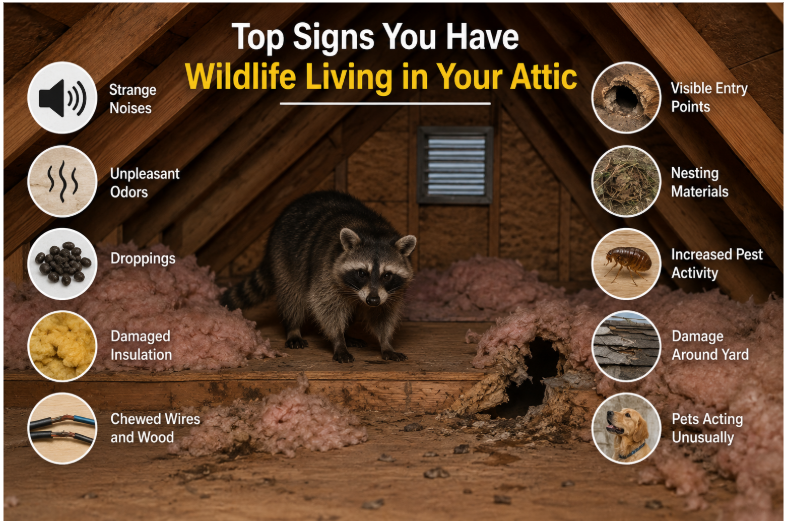
Top Signs You Have Wildlife Living in Your Attic
Your attic is one of the most attractive places for wildlife to hide. It provides warmth, safety, and protection from predators and harsh weather. Animals like squirrels, raccoons, bats, mice, and birds often find small openings around roofs, vents, or chimneys and quietly move into attic spaces.
The problem is that many homeowners don’t realize they have unwanted visitors until the damage becomes serious. Knowing the early warning signs can help you protect your home, avoid costly repairs, and keep your family safe.
1. Strange Noises Coming From the Ceiling
One of the first signs of wildlife in your attic is unusual sounds. You may hear scratching, scurrying, thumping, squeaking, or fluttering noises, especially during the early morning or late evening.
Different animals are active at different times:
- Squirrels are usually active during the day.
- Raccoons are mostly active at night.
- Bats may leave the attic at sunset and return before sunrise.
- Mice and rats can be heard moving around throughout the night.
If these sounds continue for several days, it’s a strong indication that wildlife has settled inside your attic.
2. Unpleasant Odors Around Your Home
A strong, musty smell coming from the attic is another common warning sign. Wildlife leaves behind urine, droppings, nesting materials, and food scraps that create unpleasant odors over time.
In some cases, an animal may become trapped and die inside the attic or walls, causing a very strong smell that spreads throughout the home. These odors can also attract insects and other pests, making the problem even worse.
3. Droppings and Urine Stains
Animal droppings are one of the clearest indicators of wildlife activity. You might notice droppings near insulation, attic flooring, or entry points.
Besides looking unpleasant, animal waste can:
- Spread bacteria
- Damage insulation
- Produce strong odors
- Reduce indoor air quality
If you discover droppings, avoid handling them without proper protective equipment.
4. Damaged Insulation
Many animals use attic insulation to build nests. As they move around, they flatten, tear, or contaminate the insulation.
Damaged insulation loses its ability to regulate indoor temperatures, which can increase heating and cooling costs. If sections of your attic insulation appear compressed, dirty, or scattered, wildlife could be responsible.
5. Chewed Wires and Wood
Rodents constantly chew to keep their teeth from growing too long. Unfortunately, they often chew electrical wiring, wooden beams, and plastic pipes.
Chewed electrical wires can increase the risk of electrical failures and even house fires. If you notice damaged wiring or bite marks on wood, it’s important to address the problem quickly.
6. Visible Entry Points Around the Roof
Wildlife only needs a small opening to enter your attic. During a roof inspection, look for:
- Damaged roof vents
- Loose shingles
- Broken soffits
- Gaps around chimneys
- Openings near roof edges
You may also notice dirty rub marks, claw scratches, or animal fur around these openings, showing where wildlife regularly enters and exits.
7. Nesting Materials
Animals build comfortable nests using whatever materials they can find. Inside an attic, nests may contain:
- Leaves
- Twigs
- Paper
- Cardboard
- Fabric
- Insulation
- Grass
Finding nesting materials is a clear sign that wildlife has been living in your attic for some time.
8. Increased Pest Activity
Wildlife often brings additional pests into your home. Fleas, ticks, mites, and insects commonly live on animals and may spread into your attic and living spaces.
If you suddenly notice more insects inside your home without an obvious reason, attic wildlife could be the hidden cause.
9. Damage Around Your Yard
Sometimes the first signs appear outside rather than inside.
Watch for:
- Torn roof shingles
- Damaged vents
- Broken fascia boards
- Animal tracks
- Claw marks on trees
- Garbage cans that have been disturbed
These signs may indicate that animals are trying to access your attic.
10. Pets Acting Unusually
Dogs and cats often detect wildlife long before people do.
If your pet repeatedly stares at the ceiling, barks at walls, scratches near attic access doors, or seems unusually interested in one area of the house, it may be reacting to sounds or smells coming from animals overhead.
Why You Shouldn’t Ignore Wildlife in Your Attic
Some homeowners assume wildlife will eventually leave on its own. Unfortunately, this rarely happens.
Animals may:
- Damage insulation
- Destroy wiring
- Spread diseases
- Create unpleasant odors
- Increase repair costs
- Attract additional pests
The longer wildlife remains inside your attic, the more extensive and expensive the damage can become.
Avoid DIY Removal Mistakes
Many homeowners attempt to trap or remove wildlife themselves. However, this approach can create additional problems if young animals are left behind or if entry points remain open.
Professional animal removal services use safe, humane methods to identify the species, remove animals properly, inspect the attic, and seal all entry points to prevent future infestations. Choosing experienced animal removal specialists also helps protect both your home and the wildlife involved.
How to Prevent Wildlife From Entering Your Attic
Preventing wildlife problems is much easier than repairing damage later.
Here are a few simple prevention tips:
- Inspect your roof every year.
- Repair damaged vents and soffits promptly.
- Trim tree branches away from your roof.
- Seal small gaps around pipes and utility lines.
- Keep garbage containers tightly closed.
- Schedule regular attic inspections if you live near wooded areas.
Routine maintenance greatly reduces the chances of wildlife entering your home.
Final Thoughts
Wildlife in your attic is more than just an inconvenience—it can lead to expensive repairs, health concerns, and long-term property damage. Paying attention to early warning signs such as unusual noises, unpleasant odors, damaged insulation, droppings, or visible roof openings can help you take action before the situation worsens.
If you suspect animals have already moved into your attic, contacting a trusted animal removal professional is the safest and most effective way to restore your home while preventing future wildlife problems.